YOUNG RUN
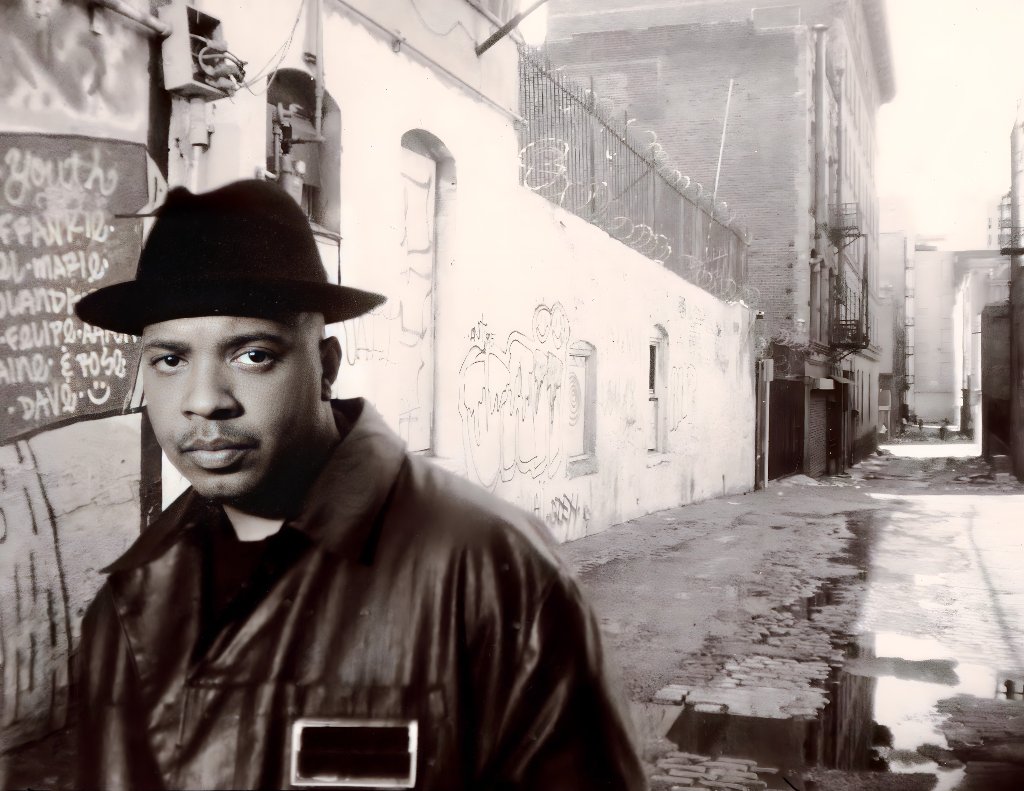
Joseph 'Run' Simmons of Run-DMC — Queens, NYC
Hollis, Queens, New York — 1984
Camera
Nikon FM2
Film
Kodak Tri-X 400
Edition
1 out of 1
Year
1984
Medium
Archival Pigment Print on Steel
Paper
Metal Steel — each print is unique
Size
24" × 18"
Frame
Custom frame by Ki Smith
Hand-painted by two of NYC's most legendary graffiti artists — each frame is a singular work of art.
Signed & numbered by the artist · Certificate of Authenticity included
Erik Elijah Brumfield
This is the alley behind the Hollis block where it all started.
Joseph Simmons — Run — was barely old enough to drive when this frame was made. Black fedora pulled low, leather jacket, leaning against the same brick wall he'd tagged as a kid. He looked straight into my lens the way he looked at everything back then: steady, certain, like he already knew what was coming and was just waiting for the rest of the world to catch up.
And what was coming was Run-DMC.
Run, his brother Russell's kid from around the way Darryl McDaniels — DMC — and a DJ named Jason Mizell who everyone called Jam Master Jay. Three kids out of Hollis, Queens, who did something nobody had done before: they took hip-hop out of the parks and the clubs and put it on stadium stages, on MTV, on the cover of Rolling Stone. They were the first rap act to go gold, the first to go platinum, the first to earn a Grammy nomination, the first to sign an endorsement deal with a major brand — those Adidas shell-toes weren't a fashion choice, they were a cultural contract.
Before them, hip-hop was a New York thing. After them, it was a worldwide language.
"King of Rock" said it plainly — they weren't asking permission from rock and roll. They were claiming the throne. Then "Raising Hell" in 1986, and that collaboration with Aerosmith on "Walk This Way" — a record that broke hip-hop through to the mainstream the way nothing else could have. Run didn't perform that song. He walked through it. That was always his gift: the calm at the center of a storm he'd helped create.
What people forget about Run is how young he was when the weight of it landed. He was a teenager carrying a movement. Russell, his older brother, built Def Jam around him and LL Cool J, but Run was the face — the voice that millions of kids across the planet first heard rap through. Every bar he laid in those early years was a brick in the foundation of an entire culture.
And Jay — Jam Master Jay — was the engine. The turntables, the cuts, the silence between the screams. Jay held it down from the back of the stage and never once asked for the front. He was murdered in his studio in 2002, and the case is still a wound that Queens carries every single day.
I shot this in the alley because Run wanted to shoot where he was from, not where he'd ended up. "Take me home," he said. So we went to Hollis, to the alley, to the wall with the names — Frankie, Marie, Youth — written in chalk that's probably still fading somewhere under thirty years of paint and weather.
He stood there in his fedora and leather, and for a second he wasn't the King of Rock. He was just a kid from Queens who'd gotten lucky enough to be exactly where the world was listening. I pressed the shutter once. That was the whole frame.
This is the story behind the photo: three boys from Hollis built the house that hip-hop still lives in. Run was the youngest of them, and somehow he carried the most. This is him before the stadiums, before the Grammys, before the loss — young, certain, and already golden.
© 1984 Erik Elijah Brumfield / 1212NYC — All rights reserved
Custom Frames by Ki Smith
Painted by SMITH of SANE & SMITH · Queens Icon ELI
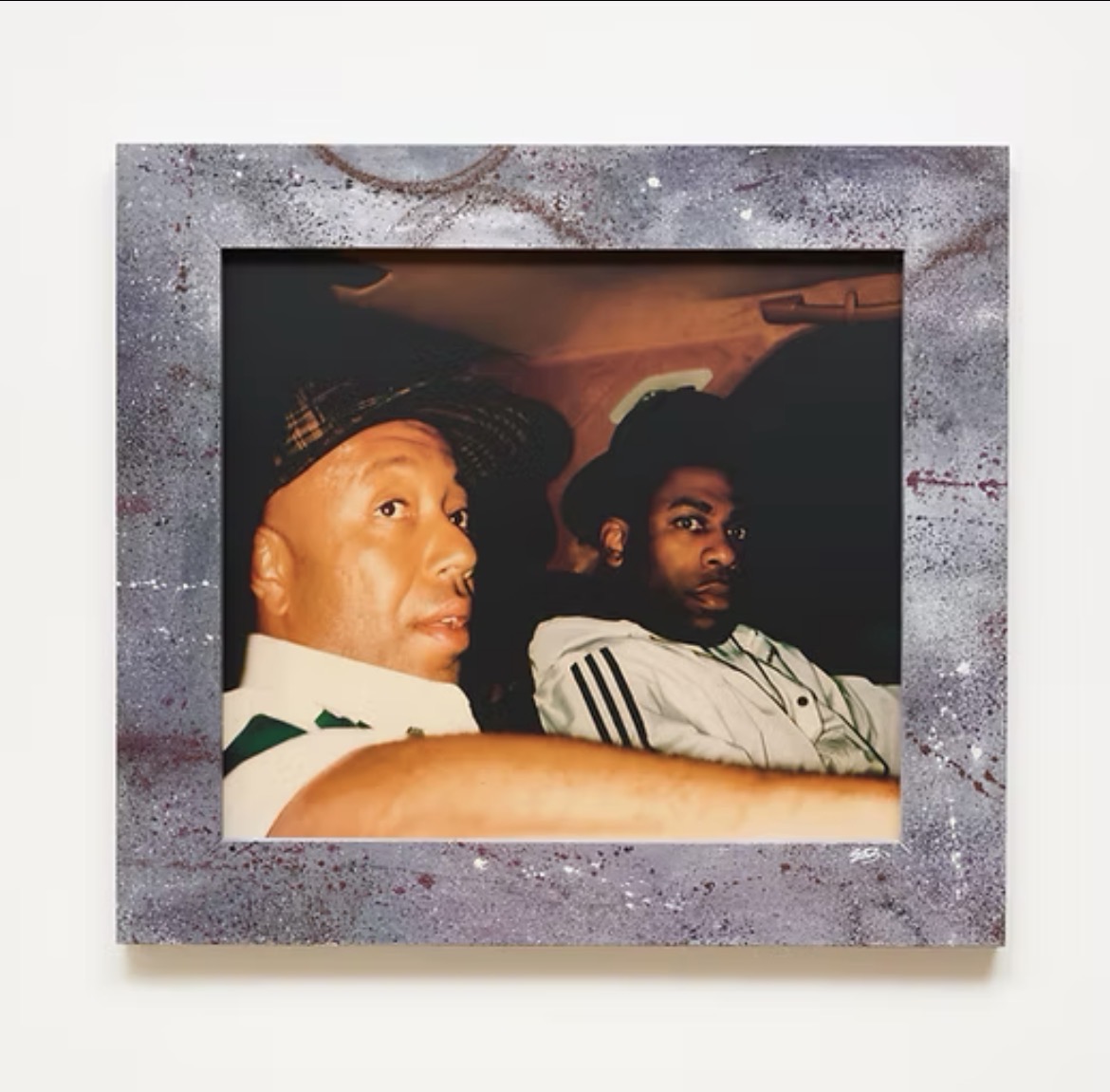
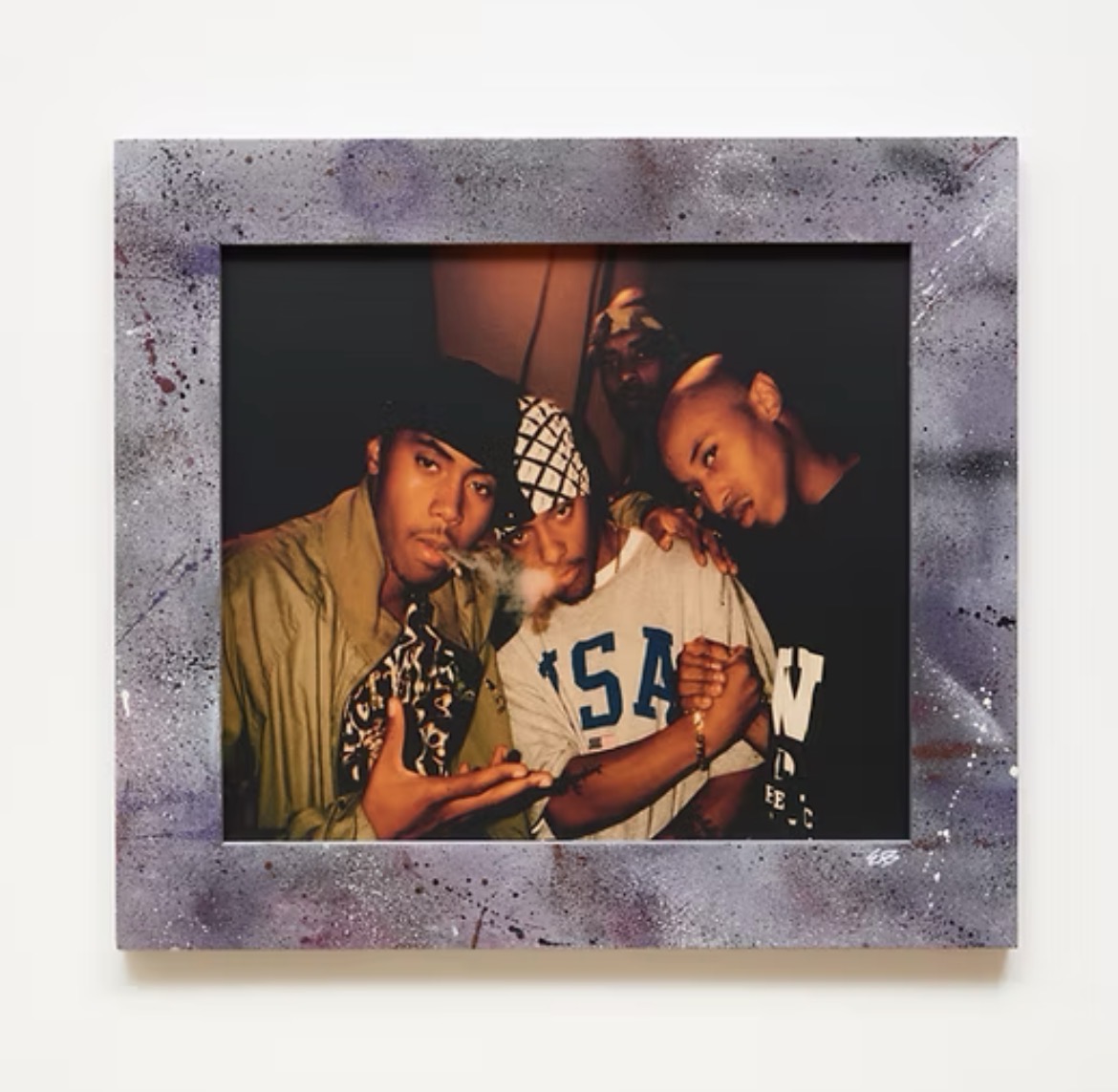
Each print in the 1212NYC Archive is housed in a one-of-a-kind custom frame handcrafted by Ki Smith and painted by two of New York City's most legendary graffiti artists: SMITH — one half of the iconic SANE & SMITH duo whose work defined the golden era of NYC subway and street graffiti — and ELI, a Queens icon whose style has been embedded in the borough's visual language for decades.
SANE & SMITH are not merely street artists. They are architects of a visual culture that ran through every borough, every train line, every wall that mattered. SMITH's hand on these frames transforms each piece from a photograph into a full artifact — a collision of two art forms that were born on the same streets, in the same era, from the same hunger.
The spray-paint drips, the cosmic swirl of color, the spatter — these are not decorative flourishes. They are SMITH's signature energy, applied with the same intentionality that made his pieces legendary on the 2 train and beyond. Queens' own ELI brings his distinct touch: bold, neighborhood-rooted, carrying the weight of the outer boroughs in every mark.
This is not merchandise. This is documented cultural history — photography meets graffiti art, the two most honest art forms New York City ever produced.
SMITH
One half of the legendary SANE & SMITH graffiti duo. Alongside his partner SANE, SMITH defined an era of New York City style writing — their pieces appeared on subway cars, highway overpasses, and buildings throughout all five boroughs during the late 1980s and early 90s. SANE & SMITH are considered foundational figures in the canon of American graffiti art. SMITH's work on these frames is among the most significant applications of his craft in a fine art context.
ELI
A Queens-born graffiti icon whose visual language is inseparable from the streets and style of the outer boroughs. ELI's work carries the DNA of NYC neighborhood culture — raw, precise, and deeply local. His contribution to these frames adds a borough-specific energy that roots each piece in the geography that produced hip-hop itself.
KI SMITH
The craftsman behind the custom frame construction. Ki Smith's fabrication forms the physical foundation of each piece — the architecture upon which SMITH and ELI's artistry lives.
Collector's Note
"Photography meets graffiti art — the two most honest art forms New York City ever produced. Each frame is irreplaceable."
— The provenance of SMITH's hand alone places these works in a category of documented cultural significance.