FLY HIGH
Redman — Brooklyn, NYC
Brooklyn, New York — 1996
Camera
Olympus OMG (OM20)
Film
Fujifilm Velvia 50
Edition
1 out of 1
Year
1996
Medium
Archival Pigment Print on Steel
Paper
Metal Steel — each print is unique
Size
24" × 18"
Frame
Custom frame by Ki Smith
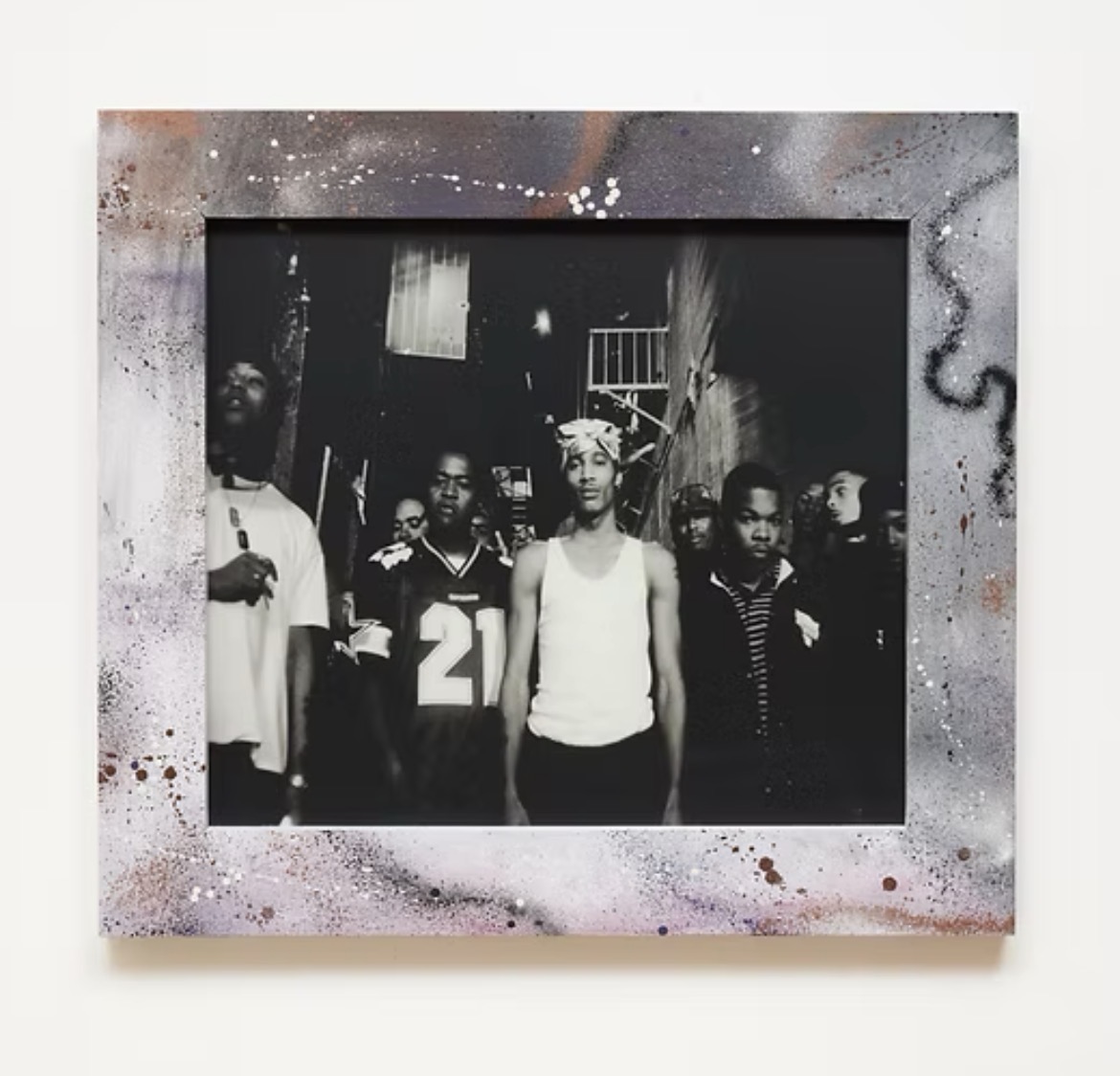
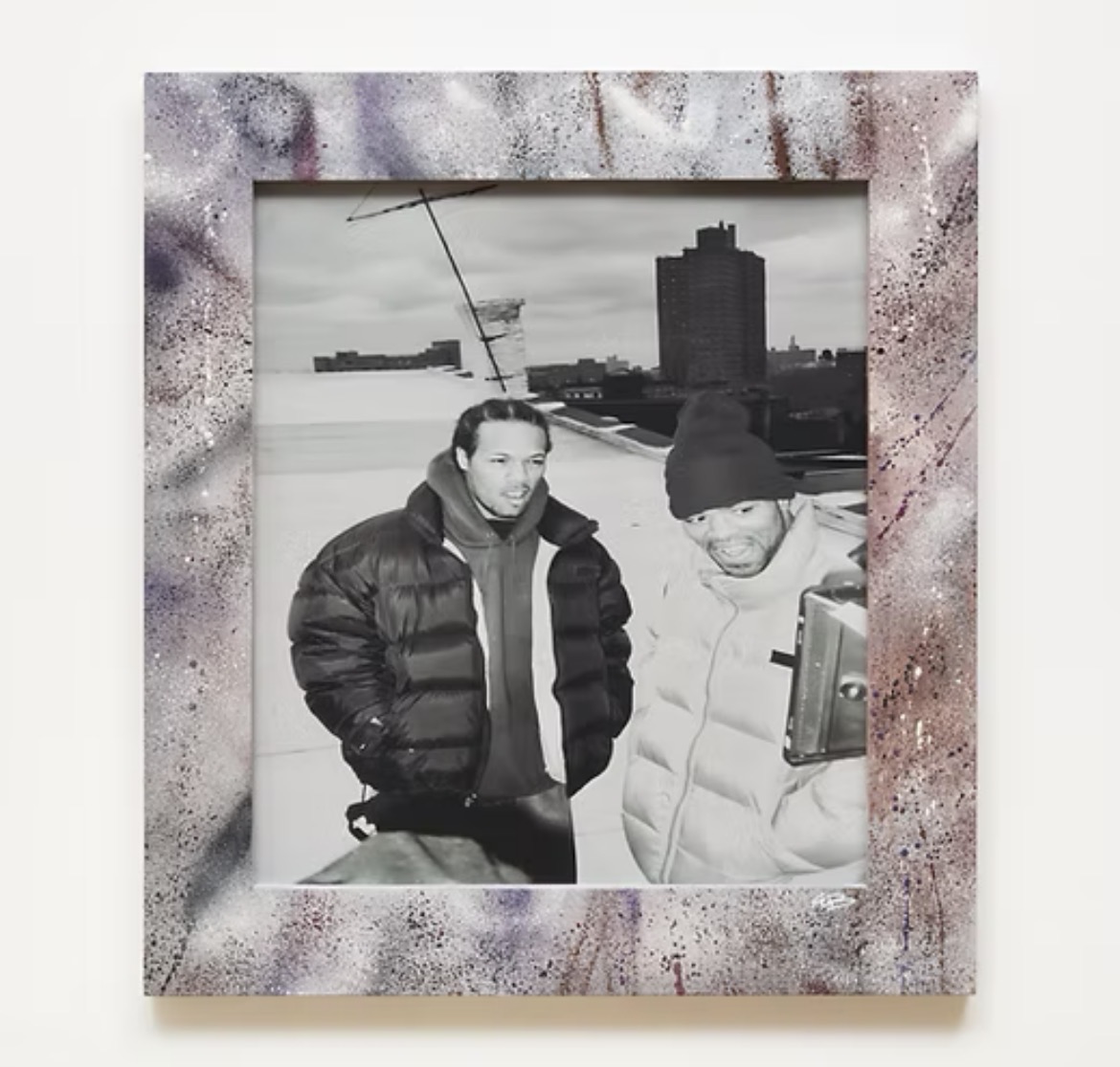
Hand-painted by two of NYC's most legendary graffiti artists — each frame is a singular work of art.
Signed & numbered by the artist · Certificate of Authenticity included
Erik Elijah Brumfield
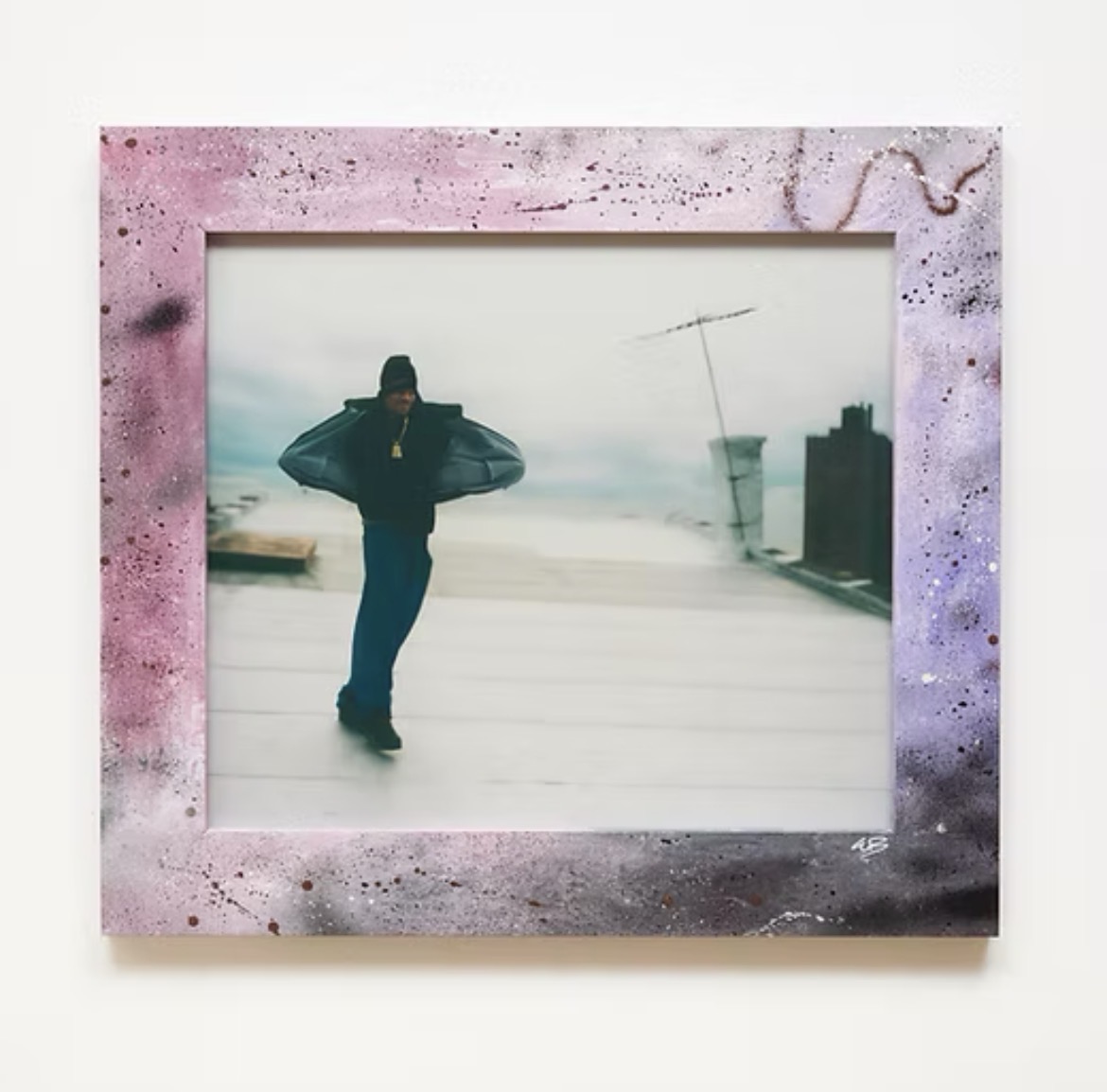
We climbed to the top of a Brooklyn rooftop in the dead of winter — Redman's idea. He wanted to shoot somewhere that felt like freedom, somewhere up above all the noise. The sky was the color of dirty dishwater, flat and heavy, the kind of overcast that makes a color photograph feel more like a memory.
He spread his arms like he was about to take off. His jacket caught the wind. I backed up as far as the roof would allow and framed him against the grey expanse of sky and rooftop — the TV antenna behind him looked like a launching pad.
What I love about this shot is what it says without saying it. Redman was never about spectacle. He was about truth. And here, on a frozen rooftop with nowhere to be, he looked completely free. That's the story of rap in 1996 — when artists still had the freedom to be exactly who they were, in exactly the moments they chose.
I shot three rolls that afternoon. This frame was the third shot on the second roll.
During this time, music video budgets weren't that big, so we had to look for locations that we didn't have to pay for — that's why we picked the roof location. This was shot in Canarsie, Brooklyn during the Funk-O-Rama video shoot.
Redman was feeling so good when he was on top of the roof. He felt like he was on top of the world, flying high — so that's why I named this picture Fly High.
© 1996 Erik Elijah Brumfield / 1212NYC — All rights reserved
Custom Frames by Ki Smith
Painted by SMITH of SANE & SMITH · Queens Icon ELI
Each print in the 1212NYC Archive is housed in a one-of-a-kind custom frame handcrafted by Ki Smith and painted by two of New York City's most legendary graffiti artists: SMITH — one half of the iconic SANE & SMITH duo whose work defined the golden era of NYC subway and street graffiti — and ELI, a Queens icon whose style has been embedded in the borough's visual language for decades.
SANE & SMITH are not merely street artists. They are architects of a visual culture that ran through every borough, every train line, every wall that mattered. SMITH's hand on these frames transforms each piece from a photograph into a full artifact — a collision of two art forms that were born on the same streets, in the same era, from the same hunger.
The spray-paint drips, the cosmic swirl of color, the spatter — these are not decorative flourishes. They are SMITH's signature energy, applied with the same intentionality that made his pieces legendary on the 2 train and beyond. Queens' own ELI brings his distinct touch: bold, neighborhood-rooted, carrying the weight of the outer boroughs in every mark.
This is not merchandise. This is documented cultural history — photography meets graffiti art, the two most honest art forms New York City ever produced.
SMITH
One half of the legendary SANE & SMITH graffiti duo. Alongside his partner SANE, SMITH defined an era of New York City style writing — their pieces appeared on subway cars, highway overpasses, and buildings throughout all five boroughs during the late 1980s and early 90s. SANE & SMITH are considered foundational figures in the canon of American graffiti art. SMITH's work on these frames is among the most significant applications of his craft in a fine art context.
ELI
A Queens-born graffiti icon whose visual language is inseparable from the streets and style of the outer boroughs. ELI's work carries the DNA of NYC neighborhood culture — raw, precise, and deeply local. His contribution to these frames adds a borough-specific energy that roots each piece in the geography that produced hip-hop itself.
KI SMITH
The craftsman behind the custom frame construction. Ki Smith's fabrication forms the physical foundation of each piece — the architecture upon which SMITH and ELI's artistry lives.
Collector's Note
"Photography meets graffiti art — the two most honest art forms New York City ever produced. Each frame is irreplaceable."
— The provenance of SMITH's hand alone places these works in a category of documented cultural significance.